Episode 2502 – Prof Olson – Rules of engagement for Herbicide use in Thailand

Thai Takhli AFB , Vietnam Veteran news, mack payne

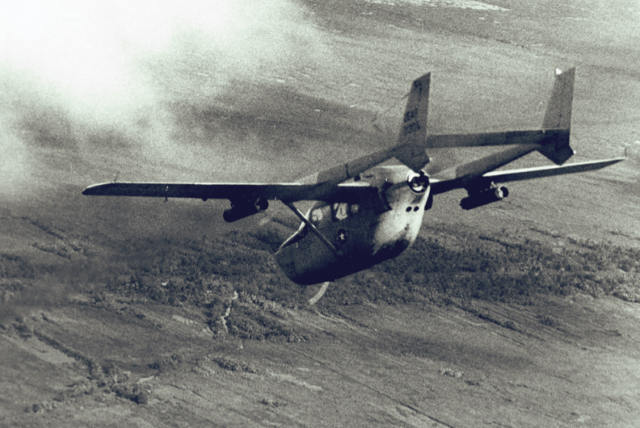
Thai Takhli AFB circa, the American Vietnam War

Episode 2502 of the Vietnam Veteran News Podcast will feature a report about the rules of engagement for use of toxic herbicides in Thailand during the American Vietnam War. This episode is a continuation of a look at the use herbicides in Thailand. This follows a series of episodes aired on this podcast that featured the Merry Band of Retirees’ report on the secret war in Laos fought by the U.S. against the communist forces in Indo-China.

The report that will be featured next is titled, Use of Agent Purple, Agent Orange and Agent Blue on Royal Thai Air Force Base Perimeters in Thailand during the Vietnam War. It was submitted by Kenneth R. Olson and Larry Cihacek. Olson was a professor in the College of Agricultural, Consumer, and Environmental Sciences, University of Illinois, Urbana, Illinois [krolson@illinois.edu]. He is a US Army Vietnam Era Veteran and professor emeritus of soil science.

Cihacek is a professor at the School of Natural Resource Sciences, North Dakota State University, Fargo, North Dakota. He is US Army veteran and professor of soil science.

In this episode, section 1.2 Rules of Engagement for Thailand were Similar to Vietnam of the paper will be featured. Both Thailand and Vietnam were communist force engagement zones for deployment of US military personnel. Both countries had similar Rules of Engagement by US and Allied Forces.  Most of the Air Force bases in Thailand were staging hubs for operations within Laos (the Secret CIA War) and in Vietnam. US military personnel located throughout Thailand were also subjected to hostile attacks from Communists insurgents.

Five bases in Thailand, including Nakhon Phanom (NKP), Ubon, Korat, U-Tapao and Udorn endured sniper fire interdiction, perimeter penetration, and sapper (combat engineer) attacks.Nam Phong an eighth Royal Thai Air Force base was used by the United States Marine Corps air operations starting in 1972.

The Rules of Engagement (ROE) provided authorization and limits for the employment of herbicides throughout the Southeast Asian conflict.

Listen to episode 2502 and discover more about the rules of engagement for use of toxic herbicides in Thailand during the American Vietnam War.

Posted in Podcast Episodes | Leave a comment

Episode 2501 – Prof Olson – Herbicide use in Thailand during American Vietnam War

Korat RTAFB, vietnam veteran news, mack payne

Korat RTAFB, 70th Aviation Detachment, Circa 1968

Episode 2501 of the Vietnam Veteran News Podcast will feature a report about the use of toxic herbicides in Thailand during the American Vietnam War. This follows a series of episodes aired on this podcast that featured the Merry Band of Retirees’ report on the secret war in Laos fought by the U.S. against the communist forces in Indo-China.

The report that will be featured next is titled, Use of Agent Purple, Agent Orange and Agent Blue on Royal Thai Air Force Base Perimeters in Thailand during the Vietnam War. It was submitted by Kenneth R. Olson and Larry Cihacek. Olson was a professor in the College of Agricultural, Consumer, and Environmental Sciences, University of Illinois, Urbana, Illinois [krolson@illinois.edu]. He is a US Army Vietnam Era Veteran and professor emeritus of soil science.

Cihacek is a professor at the School of Natural Resource Sciences, North Dakota State University, Fargo, North Dakota. He is US Army veteran and professor of soil science.

In this episode, the introduction of the peer-reviewed paper will be featured. The abstract reported: Seven Royal Thai Air Force bases in Thailand were used by the United States Air Force (USAF) during the Vietnam War as staging hubs for operations in Laos and Cambodia.

Five bases in Thailand, including Nakhon Phanom (NKP), Ubon, Korat, U-Tapao and Udorn endured sniper fire interdiction, perimeter penetration, and sapper (combat engineer) attacks.Nam Phong an eighth Royal Thai Air Force base was used by the United States Marine Corps air operations starting in 1972.

US Military personnel stationed throughout Thailand were also attacked by Communists insurgents.  Two herbicides, Agent Purple and Agent Orange containing 2, 4, 5-T contaminated with dioxin (TCDD – 2,3,7,8 tetrachlorodibenzodioxin)and a third herbicide, the arsenic-based Agent Blue, were routinely received at these Thailand airbases in support of air missions and to keep airbases and perimeter fences clear of vegetation.

Listen to episode 2501 and discover more about the use of toxic herbicides in Thailand during the American Vietnam War.

Posted in Podcast Episodes | Leave a comment

Episode 2500– April 30, 1975 – The darkest day for South Vietnam

Việt Museum, vietnam veteran news, mack payne

Andy Pham, vietnam veteran news, mack payne

Andy Pham at the Viet Museum


Episode 2500 of the Vietnam Veteran News Podcast will feature an explanation of why April 30 is the darkest day of the year for the Vietnamese Diaspora in America.

On January 27, 1973 The Paris Peace Accords were signed. The purpose of that document was to end the American War in Vietnam. It included such provisions as:

  • The withdrawal of all U.S. and allied forces within sixty days.
  • The return of prisoners of war parallel to the above.
  • The clearing of mines from North Vietnamese ports by the U.S.
  • The reunification of Vietnam through peaceful means without coercion or annexation by either party, and without foreign interference.
  • The withdrawal of foreign troops from Laos and Cambodia.

The document did not live up to its expectations. A mere two years later on April 30, 2023, the murderous North Vietnamese communists disregarded the intent of the Paris Peace Accords by militarily invading South Vietnam and forever crushing the hopes or the South Vietnamese people of living in a free country.

To the day, the one million Vietnamese Diaspora who live in this country refer to the month of April as Black April because that is the month their lives were ripped apart and they had to leave their home country or face death and privation.

In 1976, Vietnamese refugee Vũ Văn Lộc founded the Immigration Resettlement and Cultural Center (IRCC) to provide educational and social services to the thousands of Vietnamese refugees coming to northern California. In 1990, he began to formally seek support to create a museum dedicated to the experiences of the Vietnamese community.

On March 14, 2006, the IRCC officially entered into an agreement with the City of San Jose and History Park San Jose, to establish the museum. The museum was established became known as The Việt Museum (Viện Bảo Tàng Việt Nam), also known as the Museum of the Boat People.

Listen to episode 2500 and discover more about why April 30 is the darkest day of the year for the Vietnamese Diaspora in America.

Posted in Podcast Episodes | Leave a comment

Episode 2499 – Two Vietnam Vets meet-up 57 years later

Lynn Pierson and Jim Moulton, vietnam veteran news, mack payne

Lynn Pierson (left) and Jim Moulton reunited recently, 57 years after spending a year together in Vietnam serving as medics.
Provided

U.S. Army medics

U.S. Army medics Jim Moulton (left) and Lynn Pierson developed a supportive friendship while serving a tour in Vietnam.
Provided

Episode 2499 of the Vietnam Veteran News Podcast will feature a story about two Vietnam Vets who met-up fifty years later. The featured story comes from The Olean Times Herald and is titled, Shinglehouse man reunites with fellow Vietnam veteran. It was submitted by Natalie Kennedy. [nkennedy@tiogapublishing.com]

The purpose of featuring this story is to illustrate to Vietnam Veterans how rewarding it can be to get back in touch with fellow Vietnam Vets. Whenever a person experiences a year in the American Vietnam War, they have a tendency to become forever bonded with those who shared those experiences.

In the featured story, the experiences of two Vietnam Vets are presented. Jim Moulton and Victor “Lynn” Pierson served together as Army medics in Vietnam.

Moulton was 18 when he enlisted in 1965. He completed basic training at Fort Oliver in Baltimore, Md., before completing a 10-week medic training at Fort Sam Houston in Texas, where he met Pierson. Pierson, 20, was drafted from his home in Cedar Rapids, Iowa.

The two hit it off immediately, recalled Moulton, sharing an irreverent sense of humor. Pierson and I were always goofing around all the time. They both served at the 3rd Field Hospital outside of Saigon.

The friends lost touch with each other after their return to the states. Years later, Moulton attempted to find Pierson but he was met with little success at every turn. Luckily his wife Linda took the search to the internet, focusing on Cedar Rapids, Iowa, and located a Lynn Pierson. From that the connection was accomplished.

The two met, had lunch and spent several hours reminiscing and catching up. Moulton said “It was just fantastic. A friend like that, you just can’t beat. He raced motorcycles and I took up alligator wrestling, so I guess we both liked living on the edge.”

Listen to episode 2499 and discover more about the two Vietnam Vets who met-up fifty years later.

Posted in Podcast Episodes | Leave a comment

Episode 2498 – Prof Olson – Windup of the Secret Laotian War Report

Laotian Herbicide effect, vietnam veteran news, mack payne

Episode 2498 of the Vietnam Veteran News Podcast will feature the summary, recommendations and acknowledgements of the Merry Band of Retirees report titled, United States Secret War in Laos: Long-Term environmental and Human Health Impacts of the Use of Chemical Weapons. The report was authored by Kenneth R. Olson, David R. Speidel and submitted to Scientific Research Publishing.

Portions of the report have been featured on the podcast in recent episodes. It was pointed out that the intricacies of Laotian affairs, and U.S. and North Vietnamese interference in them, led to a mutual policy of ignoring the other, at least in the public eye. This did not prevent the North Vietnamese from violating Lao neutrality by protecting and expanding their supply conduit with the support of their Pathet Lao allies in their war against the central Lao government. U.S. intervention came in increments in the form of a CIA-backed clandestine army in its fight with the communists and constant spraying of herbicide weapons and bombing. The CIA also provided support for the Lao government.

The primary objective of this study was to: 1) determine locations of potential dioxin TCDD and arsenic hotspots as a result the secret chemical spraying missions on the Hồ Chi Minh Trail in Laos and 2) determine environmental and human health effects from the spraying of tactical herbicides containing dioxin (TCDD) and/or arsenic.

According to Professor Olson, One of the last untold stories of the Second Indochina War in Southeast Asia was the United States secret use of the tactical herbicides, rather than ground troops, in the neutral nation of Laos. The United States has never taken full responsibility for spraying the tactical herbicides used on Ho Chi Minh Trail in Laos during the Second Indochina War.

And yet, in one of the larger oddities of history, the most painful legacy of the war has become a cornerstone of reconciliation.

Listen to episode 2498 and discover more about the summary, recommendations and acknowledgements of the Merry Band of Retirees report titled, United States Secret War in Laos: Long-Term environmental and Human Health Impacts of the Use of Chemical Weapons. The report was authored by Kenneth R. Olson, David R. Speidel and submitted to Scientific Research Publishing.


Posted in Podcast Episodes | Leave a comment

Episode 2497 – Prof Olson – Make mud not war

Agent Orange, vietnam veteran news, mack payne

Herbicide service station somewhere in Indo-China

Episode 2497 of the Vietnam Veteran News Podcast will feature portions of a scientific paper about methods utilized by the U.S. to stem the flow of men and material on the Ho Chi Minh Trail. The featured paper was submitted to the Scientific Research Publishing service by Professor Kenneth R. Olson of the College of Agricultural, Consumer, and Environmental Sciences, University of Illinois, Urbana, USA and David R. Speidel of the Natural Resource Conservation Service and Foreign Agricultural Service, Benton, Missouri, USA.

The paper is titled, United States Secret War in Laos: Long-Term Environmental and Human Health Impacts of the Use of Chemical Weapons. In this episode the portions of the paper dealing with methods utilized by the U.S. to stem the flow of men and material on the Ho Chi Minh Trail will be featured [3.1. Hồ Chi Minh Trail Interdiction and Expansion (1965-1968)].

The intricacies of Laotian affairs, and U.S. and North Vietnamese interference in them, led to a mutual policy of ignoring the other, at least in the public eye. This did not prevent the North Vietnamese from violating Lao neutrality by protecting and expanding their supply conduit with the support of their Pathet Lao allies in their war against the central Lao government. U.S. intervention came in increments in the form of a CIA-backed clandestine army in its fight with the communists and constant spraying of herbicide weapons and bombing. The CIA also provided support for the Lao government.

The primary objective of this study was to: 1) determine locations of potential dioxin TCDD and arsenic hotspots as a result the secret chemical spraying missions on the Hồ Chi Minh Trail in Laos and 2) determine environmental and human health effects from the spraying of tactical herbicides containing dioxin (TCDD) and/or arsenic.

Listen to episode 2497 and discover more about methods utilized by the U.S. to stem the flow of men and material on the Ho Chi Minh Trail.

Posted in Podcast Episodes | Leave a comment

Episode 2496 – How Vietnam Vets were honored in Sydney

Honour Board, vietnam veteran news, mack payne

Courtesy – NSW Government

Episode 2496 of the Vietnam Veteran News Podcast will feature a story about how students at a high school in Sydney, Australia honored its Vietnam Veterans. The featured story comes from the New South Wales Government website and is titled, Lest we forget – school honors its Vietnam veterans.  It was submitted by Linda Doherty.

Australia was an important ally for the U.S. in the American Vietnam War. As with other allies in that war, the Australians and New Zealanders show appreciation for the services of their countrymen and women in Vietnam.

Doherty reported in her story that Aussie Vietnam Vet Ken Stevenson collaborated with Sydney Technical High School to create an honor board for former students who served in the Vietnam War. He described it as a “Hands-on history” project.

Mr. Stevenson, president of the Teachers RSL Sub-branch and an Old Boy of ‘Tech High’, has spent three years collaborating with students, teachers and military historians to source the names of 91 former students who went to war.

On April 6, 2023, The Vietnam War honor board was dedicated by the NSW Governor, Her Excellency the Honorable Margaret Beazley, in the presence of Premier Chris Minns, Major-General Paul Irving, RSL NSW President Ray James, Department of Education officials and school staff and students, who led the ceremony.

In Vietnam Stevenson served at the First Australian Task force headquarters at Nui Dat and with the Psychological Operations Unit, driving trucks and open Land Rovers for 312 days.

On his return to Australia he worked at Heathcote High School as a mathematics teacher, before spending four years in Papua New Guinea as a missionary linguist.

For many years Mr. Stevenson was mathematics head teacher at Sydney Technical College in Ultimo, where Sydney Technical High School was originally located, and currently lectures in statistics at the University of New South Wales.

Listen to episode 2496 and discover more about how students at a high school in Sydney, Australia honored its Vietnam Veterans.

Posted in Podcast Episodes | Leave a comment

Episode 2495 – Prof Olson – Secret Laotian War management

Ho Chi Minh Trail, vietnam veteran news, mack payneEpisode 2495 of the Vietnam Veteran News Podcast will feature portions of a paper about how the secret war in Laos was managed. The featured paper was submitted to the Scientific Research Publishing service by Professor Kenneth R. Olson of the College of Agricultural, Consumer, and Environmental Sciences, University of Illinois, Urbana, USA and David R. Speidel of the Natural Resource Conservation Service and Foreign Agricultural Service, Benton, Missouri, USA.

The paper is titled, United States Secret War in Laos: Long-Term Environmental and Human Health Impacts of the Use of Chemical Weapons  In this episode the portions of the paper dealing with the management of the secret war in Laos and the air operations will be featured.

Starting in 1959, the United States government conducted the Secret War in Laos. The CIA took the operational lead but its interactions with and connections to other agencies and countries were complicated. The Secret War in Laos involved the CIA operatives, the US State Department via the Laos and South Vietnam Ambassadors, Department of Defense military soldiers, the White House, USDA and the governments of Laos, Thailand and South Vietnam. An additional complication was the frequent changing of Laotian Ambassadors (five times) in addition to a few South Vietnam Ambassador changes. All these Ambassadors, CIA Station Chiefs and various DOD military Generals all wanted to have their voices heard.

Olson and Speidel discovered as a result of our delivery of herbicides on the Ho Chi Minh Trail  only the Laotian and Cambodian civilians in the were deprived of food. The NVA and VC soldiers brought their own food.

The primary objective of this study was to: 1) determine locations of potential dioxin TCDD and arsenic hotspots as a result the secret chemical spraying missions on the Hồ Chi Minh Trail in Laos and 2) determine environmental and human health effects from the spraying of tactical herbicides containing dioxin (TCDD) and/or arsenic.

Listen to episode 2495 and discover more about how the secret war in Laos was managed.

Posted in Podcast Episodes | Leave a comment

Episode 2494 – Prof Olson – Secret bombing and herbicide use in Laos

B-52 bombing, vietnam veteran news, mack payneEpisode 2494 of the Vietnam Veteran News Podcast will feature portions of a paper about the secret bombing and biological warfare committed by the U.S. in Laos.

The paper was submitted to the Scientific Research Publishing service by Professor Kenneth R. Olson of the College of Agricultural, Consumer, and Environmental Sciences, University of Illinois, Urbana, USA and David R. Speidel of the Natural Resource Conservation Service and Foreign Agricultural Service, Benton, Missouri, USA.

In this episode the portions of the paper dealing with bombing and herbicide use will be featured. According to the writers, for ten years (1964-1973), the CIA, with the assistance of the US Air Force, conducted intensive daily aerial bombing campaigns over northern and southern Laos using automated air war techniques. Local mercenary armies and U.S. military units were sworn to secrecy. Two-thirds of Laos was subjected to 580,344 bombing missions and a total of more than two million tons of aerial-dropped explosive ordinance. The bombing equates to one B-52 plane load of bombs being dropped every eight minutes for nine years—about two tons of bombs per person. Laos holds the per capita record as the most heavily bombed country in world history.

They also found, along the southern mountainous spine between Laos and Vietnam ran the Vietnamese military transport route, known as the Hồ Chi Minh Trail. Like in Vietnam, the area was extensively and sprayed regularly with herbicides. Unlike with Vietnam, few outsiders know about it.

The primary objective of this study was to: 1) determine locations of potential dioxin TCDD and arsenic hotspots as a result the secret chemical spraying missions on the Hồ Chi Minh Trail in Laos and 2) determine environmental and human health effects from the spraying of tactical herbicides containing dioxin (TCDD) and/or arsenic.

Listen to episode 2494 and discover more about the secret bombing and biological warfare committed by the U.S. in Laos.

Posted in Podcast Episodes | Leave a comment

Episode 2493 – How it all started in Vietnam with the Nasty Boats

Nasty-class PTF-6, vietnam veteran news, mack payneEpisode 2493 of the Vietnam Veteran News Podcast will feature a story about how the American Vietnam War began with the Nasty Boats. The featured story comes from the Coffee or Die Magazine and is titled, Expansive History of Navy SWCC. It was submitted by Matt Fratus.

Fratus is a history staff writer for Coffee or Die. He prides himself on uncovering the most fascinating tales of history by sharing them through any means of engaging storytelling. He writes for his micro-blog @LateNightHistory on Instagram, where he shares the story behind the image. He is also the host of the Late Night History podcast. When not writing about history, Matt enjoys volunteering for One More Wave and rooting for Boston sports teams.

Coffee or Die Magazine is Black Rifle Coffee Company’s news and lifestyle magazine. Their online platform, coffeeordie.com, was launched in June 2018. In July 2021, they added a quarterly print magazine. They cover stories both about and for the military, first responder, veteran, and coffee enthusiast communities.

In the process of describing the Naval Advisory Detachment that operated in the American Vietnam War, Fratus laid out the beginnings of that War. He told about the origination of the MACV-SOG/NAD and how it used small boats to conduct harassment raids against North Vietnamese installations.

Here is the key point he made in his article, On the night of Aug. 3, 1964, Hawes’ instructed the Nasties to target North Vietnamese radar installations and security bases at the islands of Hon Niu (or Hon Ngu) and Hon Mat (or Hon Me). The Nasties made their assault and destroyed their objectives, but on the way back to Da Nang, North Vietnamese watercraft trailed in pursuit. Hawes’ team outran them. However, the North Vietnamese were committed to retaliation.

According to Hawes, this NVA pursuit team allegedly carried out attacks against the USS Maddox and USS Turner Joy that exploded into the hugely controversial Gulf of Tonkin Incident, which many see as the official start of the Vietnam War.

Listen to episode 2493 and discover more about how the American Vietnam War began with the Nasty Boats.

Posted in Podcast Episodes | Leave a comment